Transform Your Bedroom with 63 Earthy Tones for a Naturally Stylish and Serene Sanctuary

Have you ever stepped into a bedroom and instantly felt a wave of calm and balance wash over you? Often, this serene ambiance is crafted through the use of earthy hues. These natural shades-ranging from clay and sand to moss and terracotta-not only provide visual comfort but also serve as powerful tools in modern interior design. This comprehensive guide explores how to infuse bedrooms with earthy tones that promote relaxation, functionality, and timeless style.
Crafting the Perfect Earth-Inspired Color Scheme
When embarking on an earthy bedroom makeover, selecting the right color palette is paramount. Earth tones extend beyond just greys and browns; they encompass warm beiges, olive greens, soft clays, muted taupes, and deep rusty reds. These colors evoke the tranquility of nature, stabilizing the room’s energy and fostering a restful environment. The goal is to create a space that feels both natural and rejuvenating, making color choice a critical first step.
For walls, I often lean towards warm greige or almond shades, which provide a neutral backdrop. To add depth, I layer in richer hues through textiles and furnishings-think moss green throw pillows, bedding in muted rust or caramel, and curtains in sandy beige. Highlighting the headboard wall with a complementary shade adds dimension without overwhelming the space.
Scientific studies, including insights from earth tones bedroom psychology, suggest these colors enhance warmth and stability, which aligns with my experience of clients spending more time in such calming environments. Balancing warm and cool earth tones-like pairing warm rust with cooler olive green-prevents monotony and keeps the room visually engaging.
Embracing Warm Neutrals for Inviting Comfort
Soft neutrals such as camel, oatmeal, and beige instantly imbue a bedroom with a cozy, lived-in feel. These hues serve as an ideal canvas for a classic, understated bedroom that harmonizes beautifully with both natural daylight and warm artificial lighting, maintaining a consistent glow throughout the day and night.
Typically, I select linen-upholstered bed frames in cream or almond tones and incorporate tactile elements like chunky knit throws, woven area rugs, and whitewashed wooden furniture. Ceramic bedside lamps with sandy matte finishes enhance the natural vibe, while abstract neutral wall art ties the look together without stark contrasts.
Warm neutrals are incredibly versatile, fitting seamlessly into minimalist, rustic, or modern organic aesthetics. As interior designer Nate Berkus famously said, layering textures breathes personality into neutral spaces-a principle I wholeheartedly endorse.
Lighting plays a crucial role here; warm bulbs with soft illumination amplify the inviting atmosphere and perfectly complement the earthy palette.
Adding Richness with Terracotta Accents
Terracotta is a timeless hue rooted in Mediterranean architecture, offering a unique way to introduce warmth without sacrificing earthiness. I often use terracotta to enliven minimalist bedrooms that might otherwise feel too stark.
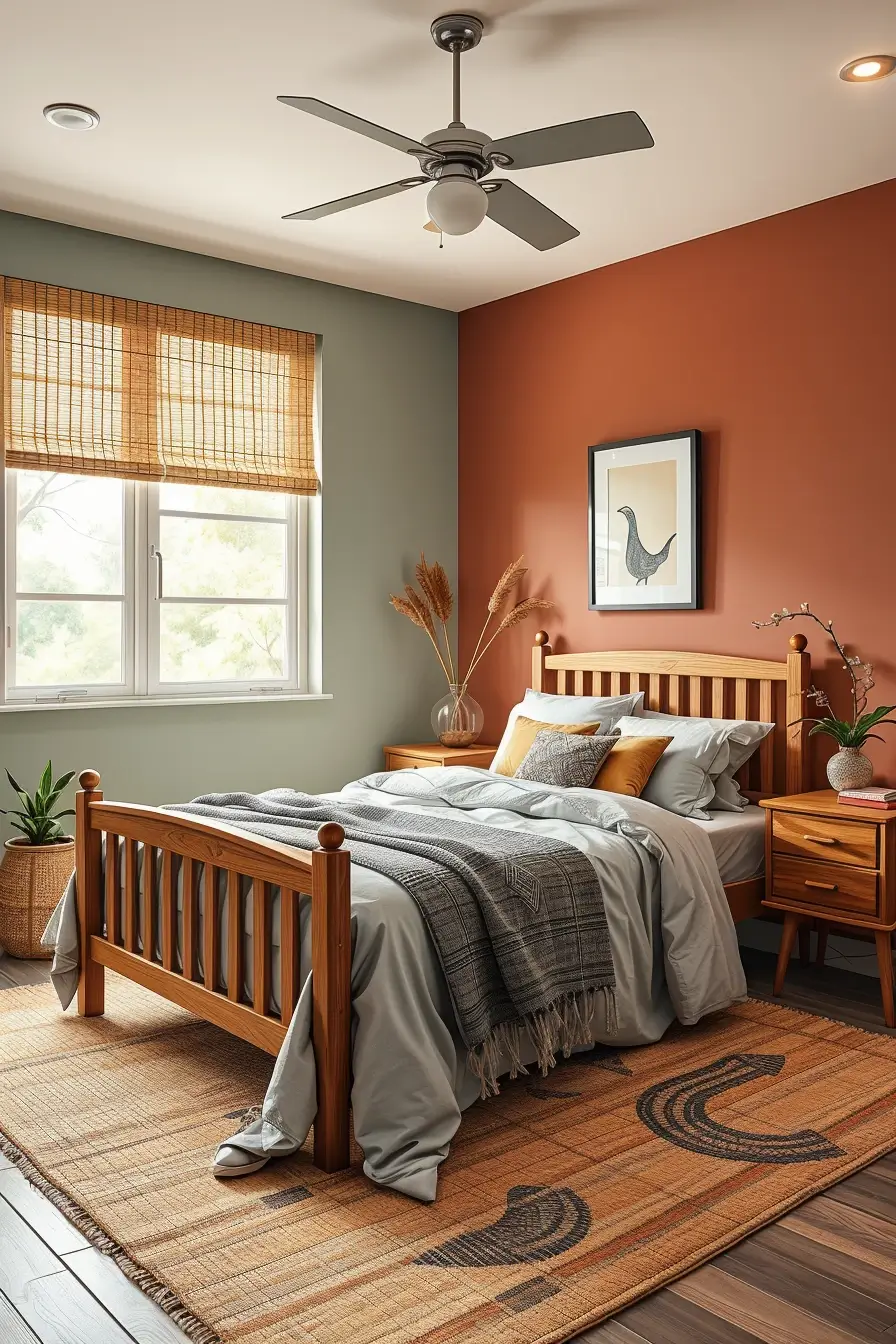
A terracotta accent wall behind the bed creates a bold yet beautiful focal point. For subtler touches, terracotta-colored throw pillows, area rugs, or ceramic vases work wonders. A terracotta-upholstered bench at the foot of the bed can also serve as a cozy highlight.
Terracotta’s emotional warmth and plush feel make it a favorite. Architectural Digest notes that pairing terracotta with rustic materials like raw wood or clay pottery evokes nostalgia and comfort. To avoid heaviness, balance terracotta with lighter shades such as cream linens, beige rugs, or whitewashed wood furniture.
Olive Green: A Touch of Nature’s Calm
Olive green brings a sophisticated, botanical vibe to bedrooms. Used sparingly as accents-through quilted bedspreads, decorative cushions, or an upholstered chair-it refreshes the space without darkening it excessively.
Pair olive green with white bedding and soft olive throws for a relaxed yet intentional look. Incorporating live plants like potted olive trees or eucalyptus arrangements enhances the natural theme, reinforcing the connection to the outdoors.
House Beautiful highlights olive green’s timeless appeal, especially when combined with warm neutrals and wooden furniture-a combination I’ve successfully implemented in numerous projects. To add tactile interest, I recommend woven jute rugs or bamboo blinds, which complement the natural aesthetic.
Deep Clay and Rust: Bold Earthy Elegance
For bedrooms needing a richer, more grounded feel, deep clay and rust tones offer a luxurious yet earthy palette. These saturated hues provide visual weight and warmth, perfect for creating cozy, opulent spaces.
I love incorporating rust velvet cushions, clay-colored walls, and ceramic lamps in deep reddish-brown shades. These pair beautifully with dark wood furniture like walnut or mahogany. Even small elements-a rust-colored bedspread or abstract artwork featuring clay tones-can add significant depth.
In my own home, a deep rust accent wall behind the bed, complemented by brass fixtures and walnut nightstands, creates an elegant yet inviting atmosphere. Veranda magazine dubs rust “the new neutral,” and I agree-it offers personality while maintaining versatility.
To elevate this look, consider textured wallpaper or hand-painted wall finishes in clay hues, adding an artistic dimension to the room.
Subtle Sophistication with Beige and Taupe
Layering beige and taupe creates a refined, understated bedroom that feels minimalist yet warm. I favor these tones for spaces that require calmness without sacrificing coziness.
Start with beige walls and introduce taupe through upholstered furniture, rugs, and drapery. Taupe bedding over a beige platform bed maintains a clean, dimensional palette. Textured fabrics like boucle, nubby linens, or suede enhance the tactile experience.
Martha Stewart Living emphasizes that combining these shades with varied textures prevents flatness-a strategy I frequently employ. Adding sculptural elements such as clay wall sconces or abstract floor lamps can break monotony and add visual interest.
Grounding with Deep Browns
Deep brown tones anchor an earthy bedroom, providing balance and a sense of security. I use these shades sparingly in furniture, exposed wood beams, or flooring to stabilize the space.
Wooden bed frames stained espresso, dark walnut dressers, and rich brown leather benches or headboards serve as grounding elements, accentuating lighter colors like cream, stone, or sand. Paired with natural fabrics such as wool throws or jute rugs, deep browns exude sophistication and warmth.
Elle Decor notes that darker hues in neutral rooms create a cozy, cocoon-like feel-ideal for bedrooms. To complete the look, I recommend adding a large mirror with a dark wood frame or vintage brass sconces, which enhance the curated aesthetic.
Light and Airy with Sandstone Tones
When aiming for a bright yet earthy bedroom, sandstone shades-soft blends of beige and blush with warm undertones-are perfect. These colors amplify natural light without feeling sterile, making them ideal for rooms with large windows or limited wall space.
I often pair sandstone walls or bedding with off-white trim and light rattan furniture. A blush-toned upholstered headboard and light oak nightstands create a serene atmosphere. Woven light fixtures or pendant lamps made from straw or raffia add a vacation-like vibe.
Domino Magazine highlights sandstone as a popular evolving neutral due to its delicate, ethereal quality. I’ve used it in master suites and guest rooms with consistently calming results. To add subtle color, incorporate light terracotta accents like ceramic lamps or throws.
Enhancing Earthy Bedrooms with Natural Textures
Earthy color schemes come alive when paired with organic textures. I layer materials like linen, wool, jute, raw wood, and clay to add depth and warmth, creating spaces that feel both luxurious and grounded.
My go-to combinations include linen duvet covers, cozy wool throws, and fluffy cotton accent pillows atop natural oak or pine bed frames. Woven baskets and jute rugs complement this organic theme, while handmade clay pottery and wall art add artisanal charm. I avoid overly polished finishes, favoring matte and unfinished textures to maintain authenticity.
Emily Henderson often emphasizes that texture is the key to enlivening neutral interiors-a philosophy I apply rigorously. Contrasting textures, such as a smooth plaster wall against a nubby wool rug or suede bedding paired with coarse linen, create tactile interest and visual balance.
Incorporating Natural Wood Finishes
Wood elements are indispensable in earthy bedroom designs, instantly adding warmth and a connection to nature. I often center a room around a standout piece like a live-edge bed frame or distressed oak dresser, celebrating the unique grain patterns and natural imperfections that paint cannot replicate.
Medium to light woods such as oak, ash, or maple provide a balanced backdrop, while walnut and teak introduce richness and contrast. Minimalist furniture with clean lines-wooden beds, rustic nightstands, and low benches-works well, often complemented by bamboo, cane, or rattan accents for added texture and breathability.
Apartment Therapy notes that wood tones harmonize with earthy palettes and help balance warm and cool colors. Even simple rooms can feel elevated and luxurious with the right wood furnishings. I advise mixing wood shades rather than matching them exactly to achieve a more organic, lived-in look.
Choosing Linen Bedding in Earthy Shades
Linen is my top choice for bedding in earthy bedrooms due to its breathability, timeless appeal, and ability to soften with each wash. Its matte finish and natural fiber texture beautifully complement warm tones like rust, taupe, and sand.
I recommend investing in a full linen set-duvet cover, fitted sheets, pillow shams, and throws-in hues such as ochre, warm beige, clay, and olive. For example, a rust-colored duvet paired with beige sheets and sage green or cream accent pillows creates layered depth without busy patterns.
Real Simple recently highlighted linen as a leading trend in organic bedroom decor, praising its softness and breathability. To avoid a flat look, add contrast with throws in lighter or darker shades or subtle patterns like stripes or checks.
Adding Character with Handcrafted Decor
Artisanal furniture and accessories infuse bedrooms with soul and individuality that mass-produced items lack. I always incorporate handcrafted pieces-woven wall hangings, handmade clay vases, embroidered pillows, or carved wooden stools-to personalize the space.
Drawing inspiration from global and local crafts, I blend Moroccan clay lamps, Peruvian textiles, and Appalachian pottery. These items spark conversation and introduce charming imperfections that enhance authenticity. Hand-painted tiles or macramé art work beautifully in boho-earthy hybrids.
Architectural Digest emphasizes the emotional value of handmade decor, a sentiment echoed by my clients who cherish meaningful, unique pieces. Creating a dedicated nook-like a floating shelf or wall niche-to showcase these accents highlights their importance and adds visual focus.
Maximizing Natural Light with Earthy Palettes
Natural light dramatically influences how earthy tones appear throughout the day. These colors transform with sunlight-from warm pumpkin and golden hues in the morning to cooler taupes by evening-adding dynamic depth to the room.
I recommend sheer linen or cotton curtains to diffuse sunlight gently. In bright rooms, lighter earth tones like sandstone or flax work best, while deeper shades such as rust or olive create cozy, cocooning effects in darker spaces. Wood finishes like oak and walnut also come alive under natural light.
Artificial lighting should complement natural light. House and Garden advise layering lighting-ceiling fixtures, bedside lamps, sconces-to maintain warmth after sunset. Reflective surfaces like natural fiber rugs or mirrors amplify light and enhance coziness.
Creating Serenity with Muted Earth Tones
Soft, subdued colors like stone gray, sage green, and dusty ochre are excellent for cultivating a tranquil bedroom atmosphere. These gentle hues reduce visual stimulation, promoting relaxation and restful sleep.
My favorite combination includes sage green bedding, soft gray walls, and oak furniture-ideal for Scandinavian-inspired spaces emphasizing light and calm. Ivory curtains and unglazed pottery add subtle texture, while pencil sketches or charcoal drawings provide cozy artistic touches.
The Spruce supports muted palettes for their sleep-enhancing benefits, a finding consistent with my experience designing meditation and aromatherapy rooms. Matte or chalk paint finishes further absorb light softly, minimizing glare and enhancing relaxation.
Accent Walls: Earthy Hues as Focal Points
Accent walls are a powerful way to introduce earthy tones without overwhelming a bedroom. Colors like clay, terracotta, or sage green create depth and a grounded feel, shifting subtly with daylight to maintain a restful ambiance.
I avoid glossy finishes, preferring chalky, matte paints that emphasize organic textures. Rough plaster or limewash coatings add tactile interest, pairing beautifully with linen curtains, reclaimed wood furniture, and stone vases.
Elle Decor highlights that a richly colored earth-tone accent wall can psychologically anchor a room, enhancing relaxation. To keep the design dynamic, I experiment with gradients or dual shades of similar earth tones and sometimes incorporate abstract murals in natural hues.
Earth Tones in Minimalist Bedrooms
While minimalism often leans on black, white, and gray, integrating earth tones softens the strictness and adds warmth. A palette of soft browns, muted greens, and dusty pinks maintains minimalism’s clean lines while making the space more inviting.
I typically use monochromatic schemes with a dominant ground color-taupe walls, natural linen bedding, and unfinished wood furniture-to create a serene, uncluttered environment. Simple, low-profile furniture with no ornate details complements the earthy palette.
Architectural Digest notes earth tones foster a relaxed atmosphere in minimal interiors, a truth I’ve witnessed firsthand. Layered textures like woven pillows, jute rugs, and ceramic vases add depth without compromising simplicity. Leather poufs or cane chairs in matching hues provide balance and subtle contrast.
Modern Bedrooms Infused with Organic Earth Colors
Modern design often features sharp lines and sleek materials, but incorporating earthy tones introduces warmth and humanity. Colors like rust, ochre, and olive soften contemporary spaces, creating a cozy yet sophisticated vibe.
I prefer applying these hues through textiles and furniture-light beige linen bed frames paired with rust-colored throws, walnut nightstands, and camel suede accent chairs. Glass and brass lighting fixtures with matte finishes complete the look, balancing modernity with natural comfort.
Dwell Magazine highlights that earth tones in contemporary interiors restore a human touch, making spaces feel more welcoming. Adding textured wall coverings like wood slats or bamboo panels in reclaimed sycamore or brown stains provides visual relief while maintaining modern sensibilities.
Bohemian Bedrooms: Earthy Colors Meet Eclectic Style
Earth tones perfectly complement bohemian design, which thrives on freedom, eclecticism, and warmth. I often use burnt orange, moss green, and sandy beige to achieve the soft, lived-in look characteristic of boho interiors.
Layering macramé wall hangings, handwoven blankets, and floor cushions in natural hues creates a vibrant yet cozy space. Oversized rattan headboards, terracotta planters, and reclaimed wood furniture enhance the grounded, sustainable feel. Pattern layering adds depth without overwhelming the senses.
Apartment Therapy notes that earthy colors balance boho’s rich textures and patterns, keeping rooms relaxing rather than chaotic. To elevate the ambiance, I add ambient lighting like hanging lanterns or gold-wrapped string lights and bold area rugs in warm reds or browns.
Farmhouse Charm with Earth-Based Palettes
Earth tones are essential in farmhouse bedrooms, reinforcing the rustic aesthetic rooted in natural materials. Warm beige walls, deep green accents, and abundant wood create a welcoming, authentic atmosphere.
Whitewashed shiplap walls paired with olive and rust quilts and pillows evoke classic farmhouse style. Wrought-iron bed frames and weathered wood dressers add timeless character, while antique mirrors and ceramic lamps in muted tones complete the look.
Adding greenery-potted herbs or eucalyptus bouquets-and jute or wool rugs with earth-tone stripes enhances tactile comfort and organic appeal. Better Homes and Gardens emphasizes that blending natural colors with antiques creates heartwarming, unpretentious spaces.
Textiles: Easy Earthy Updates
For those hesitant to commit to permanent color changes, textiles offer a flexible way to introduce earthy tones. Bedding, rugs, and throws in terracotta, taupe, and rust provide warmth and texture without repainting walls.
I like layering large jute or wool rugs under the bed, accented by patterned kilim runners. Linen bedding in light browns and dusty oranges pairs well with knit poufs and woven cotton throws. Sheer earth-toned curtains add softness and another design layer.
HGTV recommends layered textiles in warm colors to add depth and comfort, a strategy I’ve successfully applied in urban apartments where repainting isn’t feasible. Adding artisanal cushions or hand-dyed quilts further personalizes the space.
Decorating with Clay Pots and Planters
Clay pots and planters are natural extensions of an earthy bedroom palette, reinforcing grounded tones and bringing nature indoors. I place terracotta or raw clay planters of varying sizes on nightstands, window sills, or in corners to add height and visual interest.
Pairing these with large-leafed plants like fiddle leaf figs or rubber trees enlivens the room while maintaining cohesion. Even small succulent pots on floating shelves contribute to the earthy vibe. I recommend keeping clay finishes raw and matte, avoiding bright glazes for authenticity.
House Beautiful highlights the mental health benefits of biophilic design elements like clay accessories, a fact I’ve observed in my projects. Hanging clay pots near windows or filling large ceramic vases with dried grasses or eucalyptus adds verticality and balances horizontal lines.
Stone-Inspired Elements to Complement Earthy Hues
Stone textures and finishes add weight and permanence to earthy bedrooms, balancing softer textiles and muted colors. Incorporating real or faux stone materials evokes a sense of refuge and connection to the landscape.
Stone-finish lamps, concrete side tables, and travertine accents introduce subtle tones of sand, limestone, and ash. Gray-brown marble bedside tables or ceramic vases add texture and richness, harmonizing with wood and woven fabrics.
Architectural Digest stresses tactile variation in earthy interiors, and stone elements provide visual and emotional grounding. For a bold statement, consider a stacked stone feature wall or stoneware pendant lights over nightstands-subtle yet impactful choices within the earth-tone spectrum.
Nature-Inspired Wall Art in Earthy Palettes
Wall art can be the heart of an earthy bedroom, especially when featuring nature-inspired themes. Abstract landscapes, botanical prints, or geometric designs using natural pigments resonate deeply with the room’s color story.
I favor framed prints in sienna, ochre, moss green, and warm neutrals, often with linen mats or clay frames. Grouping three pieces above the bed creates a balanced focal point. This approach is especially effective in urban apartments lacking natural views.
Real Simple notes that warm earth-tone art reduces visual clutter and supports emotional well-being-a technique I use frequently. Incorporating mixed media or handcrafted pieces from local artisans adds uniqueness and community connection.
Earthy Accent Furniture for Layered Style
Accent furniture in earth tones anchors a bedroom’s design without overwhelming it. I prefer starting with neutral walls and bedding, then introducing color through pieces like camel armchairs or walnut benches, which add texture and visual interest.
Favorites include low-profile wooden bed frames, mid-century walnut nightstands, and velvet chairs in olive or terracotta. Cane benches and natural oak sideboards also enrich the palette. These items define the room’s character and provide functional beauty.
Better Homes & Gardens highlights the versatility of earth-tone furniture, which complements boho, farmhouse, or contemporary styles alike. Adding practical accents like storage ottomans or textured poufs in beige or clay enhances both form and function.
Soft, Layered Lighting to Enhance Earthy Hues
Lighting profoundly influences how earthy tones are perceived. Warm, diffused light accentuates their richness, so I recommend layered lighting-ambient, task, and accent-to create depth and warmth without flattening the palette.
Flush-mount fixtures in brass or matte black provide ambient glow, while bedside lamps made from rattan or clay with linen shades offer cozy task lighting. Accent lights like LED strips under the bed or wall sconces highlight textured walls or artwork.
Switching to warm LED bulbs transformed my own bedroom’s atmosphere, making earth tones appear brighter and more inviting. The Spruce supports this, noting that warm light paired with earth tones simulates natural light, boosting mood and aesthetics.
For flexibility, I suggest installing dimmers and smart bulbs to adjust lighting throughout the day, allowing your bedroom to evolve with your needs.
Optimizing Earthy Tones in Compact Bedrooms
Designing small bedrooms with earth tones can be challenging but rewarding. Contrary to popular belief, darker shades can make a small room feel cozy rather than cramped. I use harmonious palettes of soft browns, clay, and beige to warm the space without overwhelming it.
Minimal furniture-floating nightstands, platform beds with built-in storage, and wall-mounted reading lights-maximizes space. I avoid stark contrasts, instead layering similar hues for a soothing effect. Textiles like taupe duvets and sand-colored throws reinforce calmness.
In a small attic bedroom I designed, warm beige walls paired with miniature natural wood furniture and linen curtains created a nest-like retreat. Domino Magazine supports using earth tones to add depth and cohesion in compact spaces. Adding mirrors with light oak or bamboo frames reflects light and visually expands the room.
Eco-Conscious Earthy Paint Choices
As a sustainable design advocate, I champion eco-friendly paints in earth tones. These low- or zero-VOC options reduce indoor toxins while perfectly complementing natural, grounded aesthetics. Brands like Clare, ECOS, and Benjamin Moore’s Natura line offer rich hues such as clay red, sage green, and adobe beige.
I love using these paints on accent walls, ceilings, or built-in storage. Their matte finishes enhance the room’s breathable, organic feel. For example, Clare’s “Dirty Chai” transformed a client’s bedroom into a warm, harmonious sanctuary.
The EPA confirms that low-VOC paints improve indoor air quality-a vital consideration since we spend so much time in bedrooms. Pairing eco-friendly paints with sustainable materials like bamboo curtains, reclaimed wood, and organic cotton sheets elevates both style and ethics.
Designing a Restful Sleep Sanctuary with Earthy Colors
Earth tones are ideal for crafting tranquil, restorative bedrooms. Their innate connection to earth, sand, and sky fosters subconscious calm, making them my go-to for sleep-focused spaces.
Soft mushroom or warm taupe walls combined with caramel bedding and moss green pillows create a soothing palette. Wooden side tables, rattan light fixtures, and linen curtains in matching shades complete the ambiance. Deep earth-toned blackout curtains enhance sleep quality by blocking light.
Many clients with insomnia have reported improved sleep hygiene after transitioning to earth-tone bedrooms. The National Sleep Foundation recommends cooler earth tones like greens and browns to reduce mental stimulation and promote deep rest.
To amplify relaxation, I suggest incorporating aromatherapy with natural essential oils such as cedarwood or vetiver, paired with bedside diffusers that complement the room’s design. These subtle touches transform a bedroom into a peaceful retreat.
Desert-Inspired Earth Tones for Boho Bedrooms
Desert hues-terracotta, clay, ochre, and sand-are perfect for bohemian bedrooms, evoking sun-baked landscapes and a grounded yet free-spirited vibe. Layered textiles, wooden accents, and macramé enhance this unpolished, inviting aesthetic.
Reclaimed wood bed frames, rattan side tables, and tribal-patterned poufs create a relaxed foundation. Organic cotton and linen bedding in muted oranges, beiges, and off-whites, topped with woven throws, complete the look.
Interior designer Justina Blakeney champions this style, emphasizing self-expression through color and texture. An adobe or sienna accent wall with subtle murals or textured plaster adds depth, while potted cacti or olive trees in clay pots reinforce the natural theme.
Budget-Friendly Earthy Bedroom Transformations
Creating an earth-toned bedroom doesn’t require a hefty budget. Simple changes like painting walls in warm neutrals (taupe, beige, dusty olive) can dramatically shift a room’s mood. Upcycling thrifted wooden furniture in natural finishes offers affordable, sustainable style.
Worn retro armchairs, vintage wooden dressers, and handmade bedside tables crafted from crates or tree stumps add character. Natural textiles like cotton and jute rugs and curtains make a significant visual impact compared to synthetics. Wall art featuring natural materials-woven hangings, dried botanical prints, or clay sculptures-enhances ambiance.
Apartment Therapy advises focusing on low-cost, high-impact updates such as lighting and textiles. Warm-colored bulbs, earth-tone lampshades, and ceramic candle holders can transform atmosphere. Layered lighting with floor lamps, string lights, and sconces adds depth. Dimmable warm LED bulbs are a cost-effective way to create inviting warmth.
Layering Natural Textures for Earthy Elegance
Texture is the cornerstone of a successful earthy bedroom. Starting with a neutral base-warm beige walls or clay-toned wallpaper-I layer raw wood, wool, jute, linen, and stone to create a sensory-rich environment.
Combining light oak beds, walnut nightstands, and raw-edged cedar benches with wool carpets, linen sheets, and handwoven baskets adds depth. Wood paneling or stone veneer walls can be introduced for added interest. Small details like ceramic vases or hammered metal lamps complete the layered look.
Elle Decor emphasizes that earthy interiors rely on fabric interplay rather than color alone. Using touchable materials like boucle and sisal enhances comfort. Adding textile wall panels or macramé art above the bed creates visual focus and softness. Sheer linen curtains layered over blackout drapes add texture and function.
Earthy Tones: A Timeless Bedroom Trend
One of the greatest strengths of earthy colors is their timelessness. Shades like olive green, soft brown, creamy taupe, and warm clay form a classic palette that suits both traditional and modern interiors. I’ve applied these tones in urban apartments, country homes, and compact studios with consistently elegant results.
Clean-lined furniture with matte finishes and natural wood grains-walnut or ash bed frames paired with beige or clay bedding-create a sophisticated foundation. Brass or matte black chandeliers, earth-tone ceramic pots, and linen curtains in moss green or off-white add refined touches.
Architectural Digest notes that earth tones promote relaxation and focus, essential qualities for bedrooms. Contrasting warm walls with cool stone or metallic accents achieves visual balance. Adding framed black-and-white nature photography or botanical prints enhances the natural theme without overwhelming the palette.
Earthy tones provide a warm, soothing foundation for any bedroom design-whether inspired by desert landscapes, classic palettes, or budget-conscious updates. By integrating organic materials and natural colors, you can create a space that feels both intimate and enduring. Have you experimented with earthy tones in your bedroom? Share your experiences and favorite tips in the comments below-we’d love to hear your story!